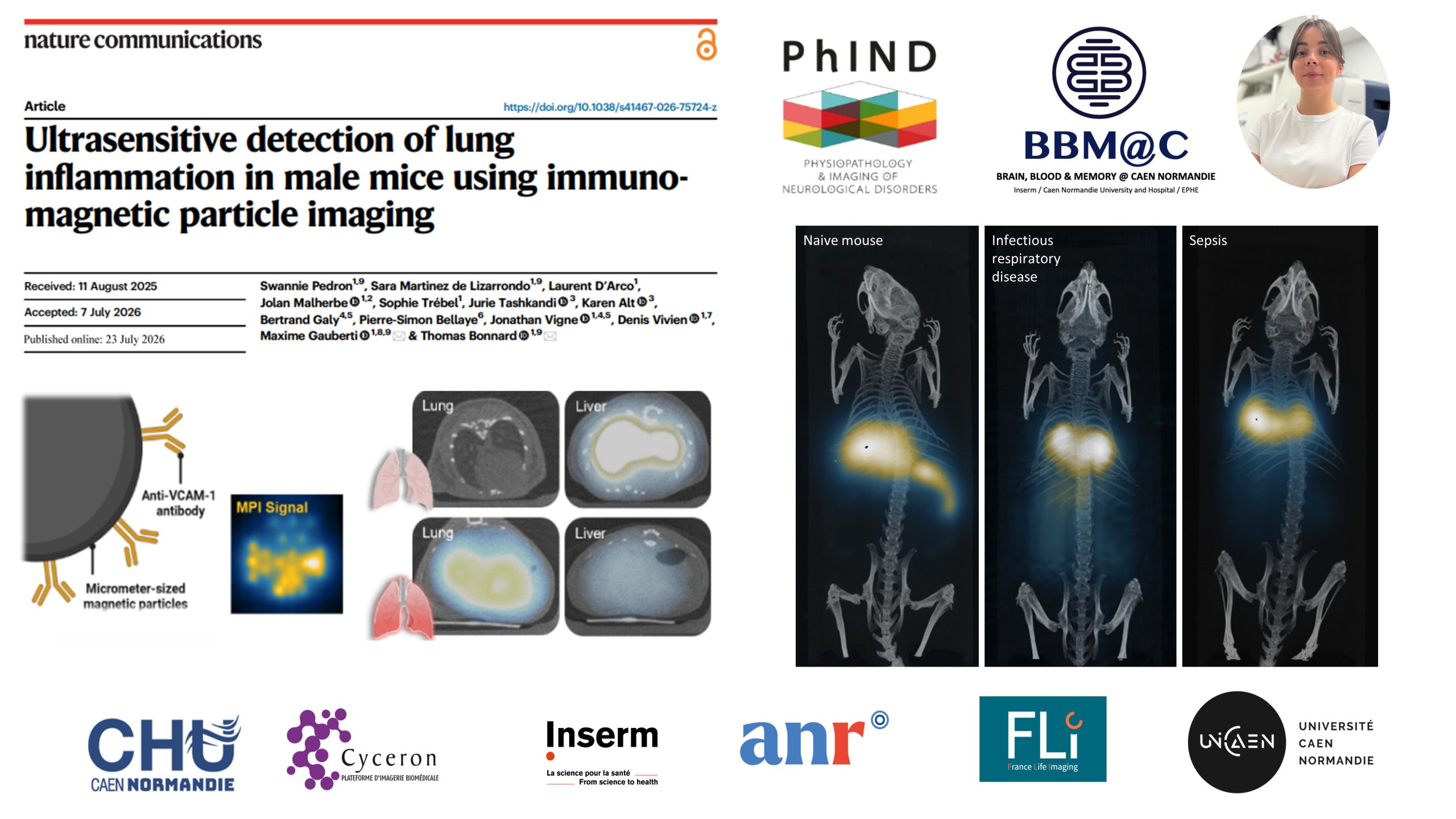
We are proud to announce that our team’s research on 𝐮𝐥𝐭𝐫𝐚𝐬𝐞𝐧𝐬𝐢𝐭𝐢𝐯𝐞 𝐦𝐚𝐠𝐧𝐞𝐭𝐢𝐜 𝐩𝐚𝐫𝐭𝐢𝐜𝐥𝐞 𝐢𝐦𝐚𝐠𝐢𝐧𝐠 𝐨𝐟 𝐥𝐮𝐧𝐠 𝐢𝐧𝐟𝐥𝐚𝐦𝐦𝐚𝐭𝐢𝐨𝐧 is officially published in Nature Communications!💥
We leveraged France’s very first Magnetic Particle Imaging (MPI) system installed at the CYCERON biomedical imaging platform, to demonstrate the efficacy of immuno-MPI for the diagnosis of pulmonary inflammation: a radiation-free diagnostic approach designed to detect inflammation at its earliest stages.
By targeting endothelial VCAM-1 expression, 𝐰𝐞 𝐜𝐚𝐧 𝐧𝐨𝐰 𝐦𝐚𝐩 𝐥𝐮𝐧𝐠 𝐢𝐧𝐟𝐥𝐚𝐦𝐦𝐚𝐭𝐢𝐨𝐧 and 𝘮𝘰𝘯𝘪𝘵𝘰𝘳 𝘸𝘩𝘰𝘭𝘦-𝘣𝘰𝘥𝘺 𝘳𝘦𝘴𝘱𝘰𝘯𝘴𝘦𝘴 in several kinds of pulmonary inflammation-related disease models, including sepsis and bleomycin-induced pulmonary fibrosis model. This proof of concept paves the way for earlier diagnoses, personalized therapeutic decisions, and real-time monitoring of anti-inflammatory treatments.
–> 𝘞𝘩𝘺 𝘵𝘩𝘪𝘴 𝘮𝘢𝘵𝘵𝘦𝘳𝘴 ? Standard imaging only shows anatomical damage once a disease is already advanced. However, in severe respiratory conditions, such as pneumonia, acute COVID-19, pulmonary fibrosis, or lung transplant rejection, detecting early inflammation is critical to determining prognosis and guiding treatment.
🔗Link to the article : https://www.nature.com/articles/s41467-026-75724-z
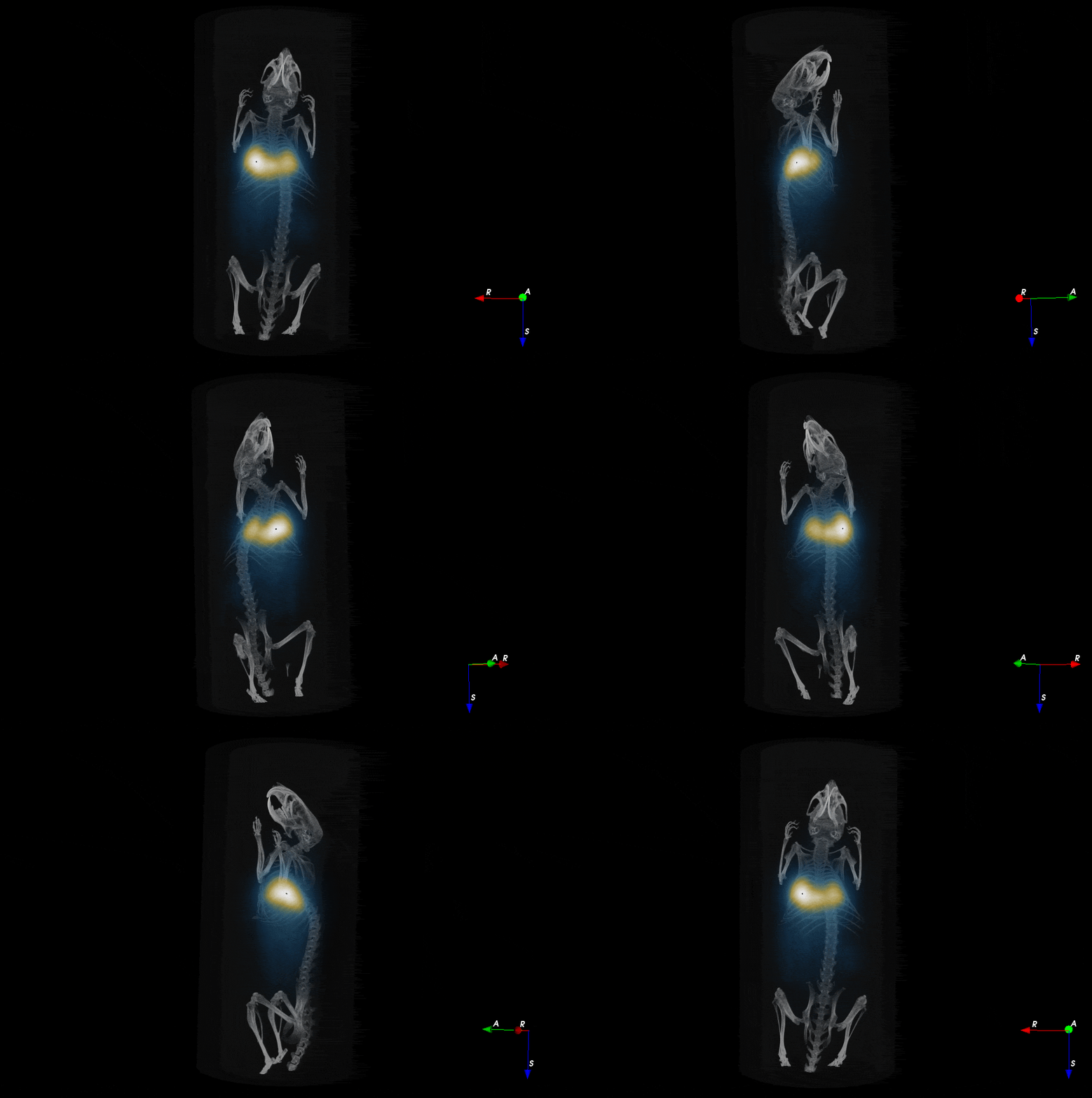
3D immuno-MPI enables sensitive and specific detection of pulmonary VCAM-1 expression using targeted micron-sized particles
Congratulations to all the co-authors on this great achievement !! 👏
𝐋𝐨𝐨𝐤𝐢𝐧𝐠 𝐚𝐡𝐞𝐚𝐝, we acknowledge the Fondation Bettencourt Schueller for supporting our next milestone : 𝐰𝐞 𝐚𝐫𝐞 𝐧𝐨𝐰 𝐝𝐞𝐯𝐞𝐥𝐨𝐩𝐢𝐧𝐠 𝐛𝐢𝐨𝐜𝐨𝐦𝐩𝐚𝐭𝐢𝐛𝐥𝐞 𝐚𝐧𝐝 𝐛𝐢𝐨𝐝𝐞𝐠𝐫𝐚𝐝𝐚𝐛𝐥𝐞 𝐩𝐫𝐨𝐛𝐞𝐬 to target distinct inflammatory markers across various disease contexts, taking our immuno-imaging approach one step closer to clinical translation 🎯
𝐁𝐫𝐚𝐢𝐧 𝐁𝐥𝐨𝐨𝐝 & 𝐌𝐞𝐦𝐨𝐫𝐲 𝐚𝐭 𝐂𝐚𝐞𝐧 𝐍𝐨𝐫𝐦𝐚𝐧𝐝𝐢𝐞 𝐈𝐧𝐬𝐭𝐢𝐭𝐮𝐭𝐞 (𝐁𝐁𝐌@𝐂)
UMR-S 1237 Physiopathology and Imaging of Neurological Disorders “PhIND”