Targeting Tertiary Lymphoid Structures in Chronic Inflammatory Disorders patients
Funded by Agence Nationale de la Recherche
Context and challenges
Tertiary lymphoid structures (TLS) are organized lymphoid aggregates that share characteristics with lymph nodes but arise in perivascular areas in response to chronic inflammation. TLS generate an in situ immune response in chronically inflamed tissues, and depending on the context, they are associated with a poor prognosis (e. g. autoimmune diseases) or with a positive impact during treatment (e. g. in many cancer types). Key players in local immunity in numerous human diseases, there is still no available tool to detect TLS in a non-invasive manner.
Objective
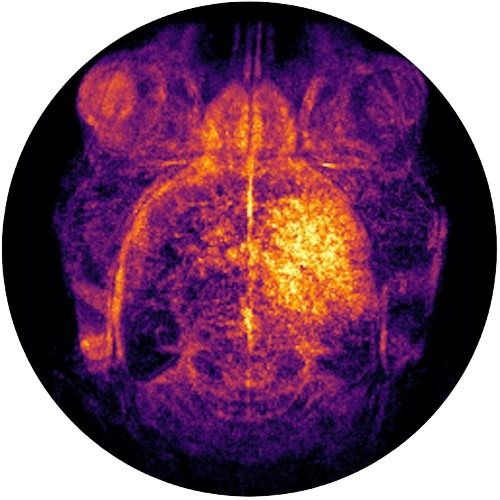
In the framework of this project, we are developing innovative targeting methods to achieve ultra-sensitive imaging of TLS. The envisioned applications in human medicine are broad, including the diagnosis of chronic inflammatory disorders and patient selection for immune checkpoint inhibitors in cancer. With the right contrast agent, we are working to obtain background-free “hotspot maps” of TLS at submillimeter resolution.


Acknowledgment to ANR
This project was funded by the French National Research Agency (ANR).
