Targeting tertiary lymphoid structures using magneto-margination
Funded by the European Research Council Executive Agency
Context and challenges
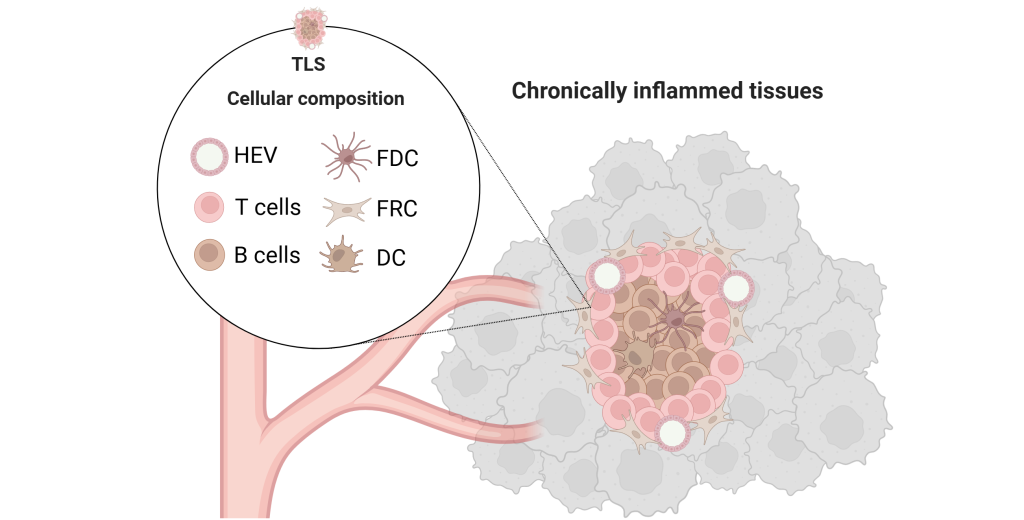
Tertiary lymphoid structures (TLS) are abnormal immune cell aggregates that form in non-lymphoid tissues during chronic inflammation, such as in cancer or autoimmune diseases, and their impact on disease is context-dependent. Due to their small size (a few hundred micrometers), TLS are not detectable with current imaging techniques and can only be identified through tissue biopsy, limiting their utility as biomarkers or therapeutic targets.
Objective
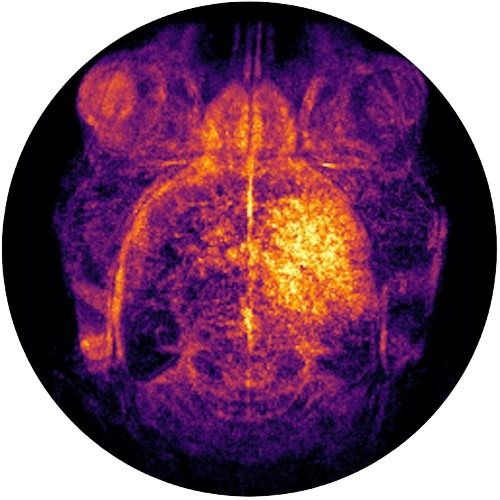
This project aims to develop new methods for non-invasive mapping of TLS using clinically available imaging modalities (MRI) and emerging technologies (MPI), and to target them therapeutically via magnetic hyperthermia in cases where their presence is linked to poor prognosis.
We are developing particles in the submicrometric size range that are sensible to magnetic fields thanks to an ultra-high density packing of iron oxide and have a margination comparable to micro-sized particles.
Project coordinator
Maxime Gauberti, MD, PhD
Related links


An ERC Consolidator Grant
This project has received funding from the European Union’s Horizon Europe research and innovation programme under grant agreement N° 101170501
