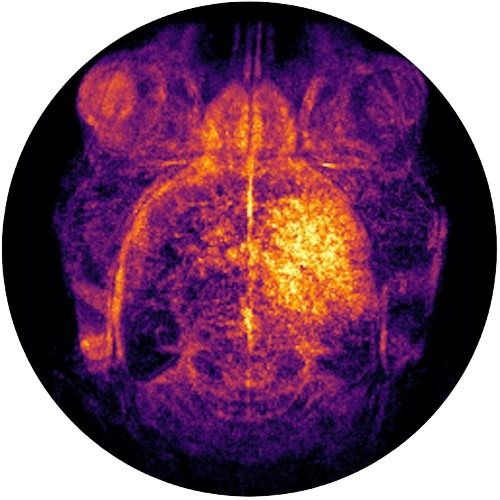
Mapping the immune system using ultrasensitive submicrometric particles
Funded by Impulscience® from the Fondation Bettencourt Schueller
Context and challenges
The immune system plays a central role in virtually all diseases, whether as a cause or consequence of tissue damage. White blood cells constantly patrol the entire body to detect and fight threats. However, understanding and monitoring this immune response is currently a major challenge, both for early diagnosis and for monitoring the progression of the disease. To date, there is no imaging technique capable of mapping the immune response throughout the human body.
Objective
This project aims to develop a new family of contrast agents for immuno-imaging (MRI, MPI, PET, and photoacoustic imaging), able to precisely pinpoint areas of inflammation and detect early signs of an immune response. The long-term objective is for these agents to be applied in clinical settings.


SEM images of our superparamagnetic particles
Our approach is centered on mimicking the function of white blood cells, replicating the immune system’s ability to detect tissue damage. To do this, we are developing targeted particles that can bind to areas of high immune activity, where leukocytes are highly concentrated.
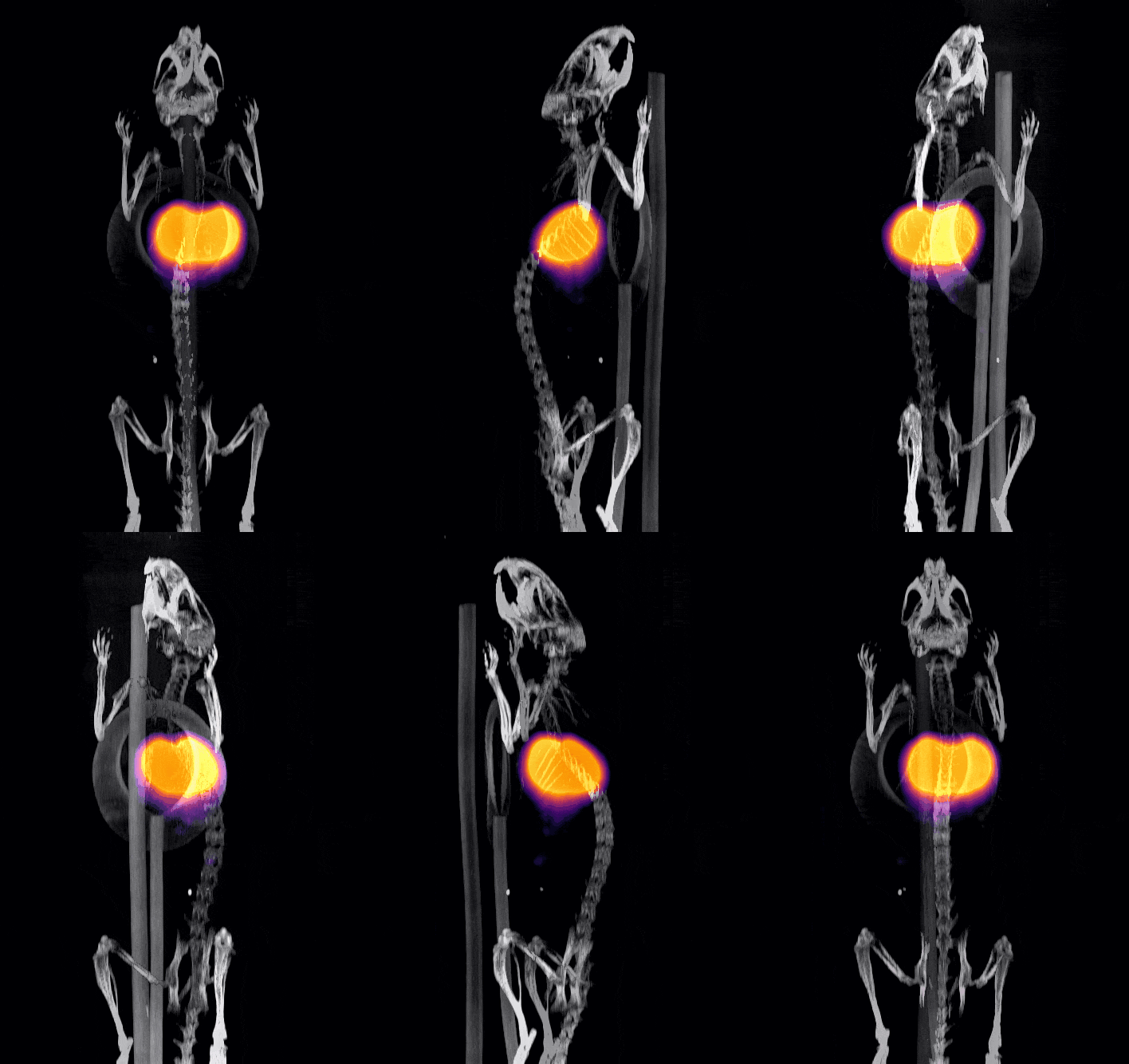
Mapping pulmonary inflammation with immuno-MPI
CT/Immuno-MPI: MPI is an emerging imaging modality that provides background free, 3D maps of the localization of superparamagnetic material in the body.
MPI detection of pulmonary inflammation (induced by LPS) following injection of particles targeting endothelial activation.
Acknowledgment to the Fondation Bettencourt Schueller
We are honored to have been selected as a recipient of a grant from the Fondation Bettencourt Schueller through the Impulscience® program. This prestigious grant, awarded to Maxime Gauberti on the MAPLE project, represents a significant milestone for our team and institution. It will be instrumental in advancing our research on improving diagnostic imaging during the next years.

